What is Alpha-Gal Syndrome? Symptoms, Causes, and Current Research
- Jordan Concannon
- Apr 20
- 3 min read
If you've recently been diagnosed with Alpha-Gal Syndrome (AGS) — or you're wondering if you might have it — you're not alone. Awareness of AGS is growing, but many people still aren't familiar with what it is or how it can change daily life.
This beginner-friendly guide will walk you through the basics:what AGS is, what causes it, what symptoms to watch for, and what researchers have recently discovered about it.

What is Alpha-Gal Syndrome?
Alpha-Gal Syndrome is a serious allergic reaction to a sugar molecule called galactose-α-1,3-galactose — more commonly known as alpha-gal.
Alpha-gal is found in the meat, tissues, and secretions of non-primate mammals (think cows, pigs, deer, lambs, etc.).When someone with AGS consumes red meat or mammal-derived products, their immune system overreacts, causing allergic symptoms — sometimes delayed by several hours after eating.
Unlike most food allergies that cause immediate reactions, Alpha-Gal reactions often appear 3–6 hours after exposure, making it harder to diagnose.
What Causes Alpha-Gal Syndrome?
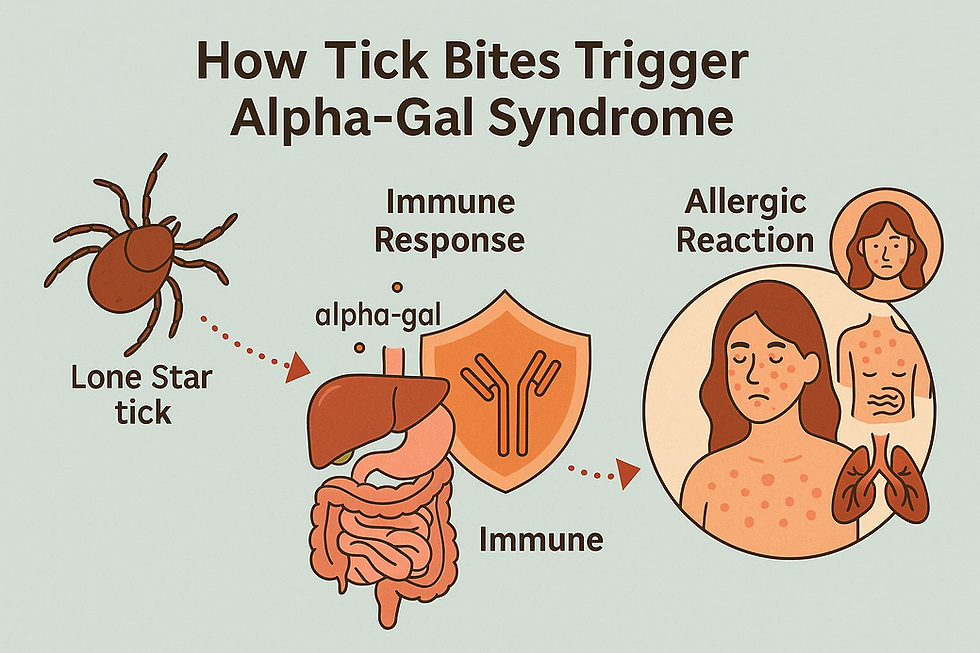
The primary cause of Alpha-Gal Syndrome is a tick bite — specifically from certain species like the Lone Star Tick (Amblyomma americanum) in the United States.
When the tick bites a human, it transfers alpha-gal molecules into the bloodstream, sensitizing the immune system.Afterward, the immune system mistakes alpha-gal in mammal meat as a threat, triggering an allergic response.
Regions most affected by AGS include:
Southeastern U.S. (especially states like Virginia, North Carolina, Arkansas, and Texas)
Midwestern U.S.
Cases are also growing internationally, including parts of Australia and Europe.
Symptoms of Alpha-Gal Syndrome
Symptoms of AGS can vary widely from person to person. Some common reactions include:
Hives, rash, or itchy skin
Swelling of the lips, face, tongue, or throat
Gastrointestinal upset (nausea, vomiting, diarrhea)
Difficulty breathing
Anaphylaxis (a life-threatening reaction that requires immediate medical attention)
Because symptoms are often delayed, many people don't initially connect their reactions to a meal they ate hours earlier.
How is Alpha-Gal Syndrome Diagnosed?
Doctors typically diagnose AGS through:
A detailed clinical history (especially exposure to ticks and reaction timing)
Blood tests measuring levels of alpha-gal specific IgE antibodies
If you suspect AGS, consult an allergist familiar with the condition. Early diagnosis is important to manage symptoms and prevent serious allergic reactions.
Current Research on Alpha-Gal Syndrome
Research on AGS is ongoing, but some recent findings include:
Rising Cases: The number of Alpha-Gal Syndrome cases is growing rapidly in the United States. A 2023 CDC study estimated that over 450,000 Americans may be affected — many undiagnosed. (Source)
More Than Just Meat: Some people react not only to meat but also to gelatin, dairy, pharmaceuticals (such as certain vaccines or medications containing mammal-derived ingredients).
Potential Treatments: Scientists are studying how the immune system processes alpha-gal and exploring future therapies — but for now, strict avoidance remains the best management strategy.
Final Thoughts
Alpha-Gal Syndrome can feel overwhelming at first, but understanding it is the first step toward living safely and fully.By staying informed, reading ingredient labels carefully, and connecting with supportive communities, you can navigate life with AGS confidently.
Here at Rooted and Rising, I’ll continue sharing updates, practical tips, and personal stories to help you live well — rooted in knowledge and rising with hope. 🌱
Stay healthy friends,
Jordan
🖇️ Reference
Centers for Disease Control and Prevention (CDC). (2023). Alpha-Gal Syndrome: An Emerging Public Health Issue


Comments