🧬 How Tick Bites Trigger Alpha-Gal Syndrome: Understanding the Science
- Jordan Concannon
- May 5
- 2 min read
Alpha-Gal Syndrome (AGS) is an allergic reaction to red meat and other mammalian products, triggered by a sugar molecule called galactose-α-1,3-galactose (alpha-gal). This condition is unique because it's not caused by a protein, as in most food allergies, but by a carbohydrate. The primary culprit in sensitizing individuals to alpha-gal is the bite of certain tick species, most notably the Lone Star tick in the United States.
🦟 The Role of Tick Bites in AGS Development
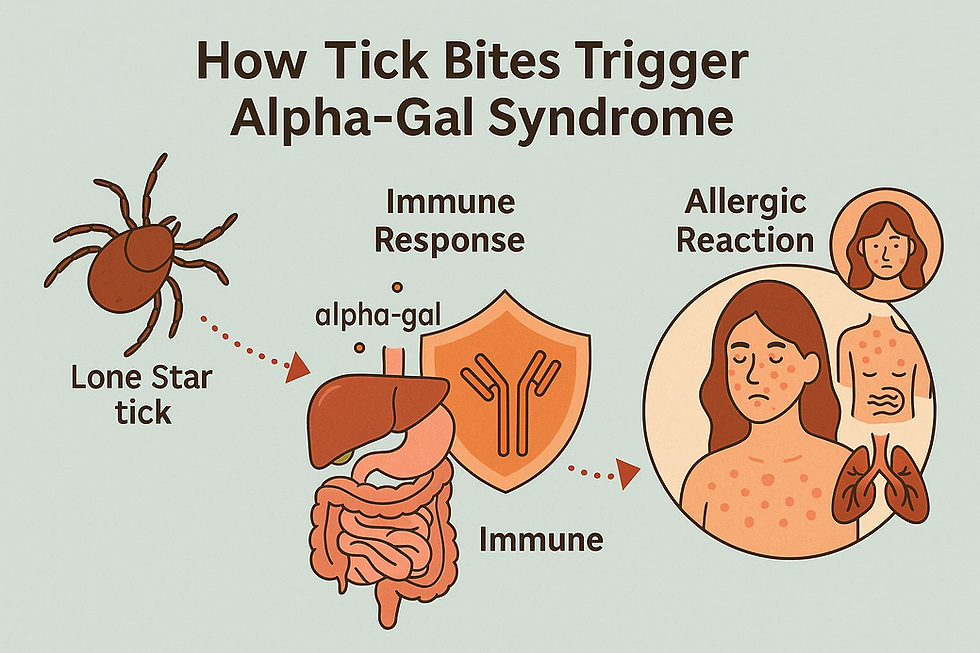
When a tick feeds on a mammalian host, it ingests alpha-gal present in the animal's blood. If the same tick later bites a human, it can transfer alpha-gal into the person's bloodstream through its saliva. This introduction of alpha-gal can sensitize the human immune system, leading to the production of specific IgE antibodies against the molecule. Subsequent consumption of red meat or other mammalian products can then trigger an allergic reaction .
🧪 The Immune Response Mechanism
The immune system typically doesn't react to alpha-gal. However, in sensitized individuals:
Sensitization Phase: The tick bite introduces alpha-gal into the bloodstream, prompting the immune system to recognize it as a foreign substance and produce IgE antibodies.
Allergic Reaction Phase: Upon consuming red meat or other mammalian products containing alpha-gal, these antibodies recognize the molecule and trigger the release of histamines and other chemicals, leading to allergic symptoms.
This reaction is often delayed, occurring 3 to 6 hours after consumption, which can make diagnosis challenging .
🌍 Geographic Distribution and Tick Species
While the Lone Star tick (Amblyomma americanum) is the primary vector in the southeastern United States, other tick species have been implicated in AGS cases globally. For instance:
Ixodes ricinus in Europe
Ixodes holocyclus in Australia
Haemaphysalis longicornis in Asia
These ticks have been found to carry alpha-gal in their saliva, suggesting a broader geographic risk for AGS .
🧬 Research Insights
Recent studies have shed light on the complexity of AGS:
Delayed Reactions: The carbohydrate nature of alpha-gal and its absorption through the digestive system contribute to the delayed onset of symptoms, distinguishing AGS from other food allergies .
Cross-Reactivity: Some individuals with AGS may also react to products like gelatin, dairy, or certain medications derived from mammalian sources, due to the presence of alpha-gal.
Persistence of Sensitization: Once sensitized, individuals may remain reactive for years, although some studies suggest that strict avoidance of tick bites and mammalian products can reduce antibody levels over time.
🛡️ Prevention and Management
Currently, there's no cure for AGS, but management strategies include:
Avoiding Tick Bites: Use insect repellents, wear protective clothing, and perform regular tick checks after outdoor activities.
Dietary Adjustments: Eliminate red meat and other mammalian products from the diet. Be cautious with processed foods, as alpha-gal can be present in gelatin and other additives.
Medical Alert: Carry an epinephrine auto-injector if prescribed, and inform healthcare providers about the allergy, especially before surgeries or receiving medications.
Stay healthy friends,
Jordan


Comments